
Blog

Your blog category

Blog

The Ultimate Guide to Lead Generation in 2026🚀

📌 Introduction In today’s digital world, every business needs more than just website traffic — it needs real customers. This is where lead generation plays a crucial role. Lead generation is the process of attracting and converting potential customers who are genuinely interested in your products or services. Without a proper strategy, businesses often waste time and money on the wrong audience. But with the right approach, you can build a steady flow of high-quality leads that grow your business consistently. 🎯 What is Lead Generation? Lead generation is all about capturing the interest of people and turning them into potential buyers. A “lead” is anyone who shows interest in your business by filling out a form, subscribing, or contacting you. The goal is simple:👉 Attract the right audience👉 Build trust👉 Convert them into paying customers 🔥 Why Lead Generation is Important Lead generation is not just about numbers — it’s about quality. Helps you find targeted customers Increases your sales opportunities Builds long-term customer relationships Saves time by focusing on interested users only 🛠️ Best Lead Generation Strategies 1. 📊 Content Marketing Creating valuable content like blogs, guides, and videos helps attract the right audience. When you provide useful information, people trust your brand and are more likely to connect with you. 2. 📢 Paid Advertising (PPC) Platforms like Google Ads and social media ads can bring instant leads. With proper targeting, you can reach people who are already searching for your services. 3. 📱 Social Media Marketing Social platforms are powerful for engagement. Regular posts, reels, and ads can help you connect with your audience and generate leads naturally. 4. 🎁 Lead Magnets Offer something valuable for free — like an ebook, checklist, or discount — in exchange for contact details. This increases conversion rates. 5. 📧 Email Marketing Once you collect leads, email marketing helps you nurture them and turn them into loyal customers over time. ⚡ Tips to Improve Lead Generation Focus on quality over quantity Use clear and attractive Call-to-Action (CTA) Optimize your website for fast loading & mobile users Build trust with reviews and testimonials Track performance using analytics 📈 Conclusion Lead generation is the backbone of any successful digital marketing strategy. By using the right techniques and focusing on your audience’s needs, you can create a system that consistently brings in valuable leads. 👉 Remember: It’s not about getting more clicks — it’s about getting the right customers. 🚀 Call to Action Want to grow your business with high-quality leads?Contact us today and let’s build a strategy that works for you!
Blog

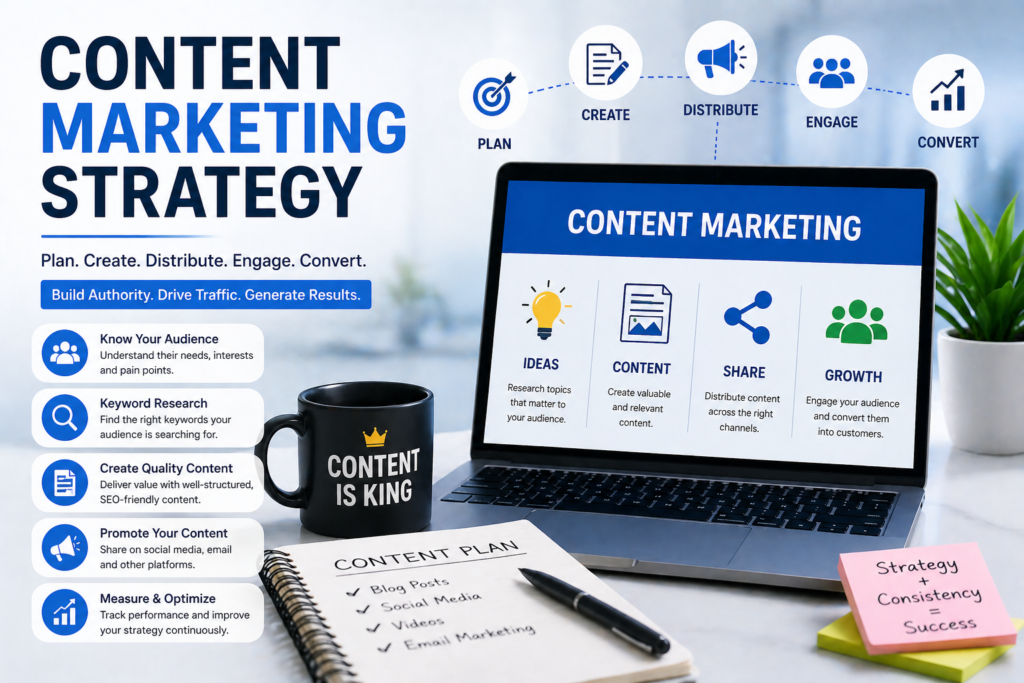
Content Marketing Strategy

📌 Introduction In today’s digital world, simply promoting your product is not enough. People don’t want ads — they want value. This is where Content Marketing comes into play. Content marketing is all about creating and sharing valuable content to attract, engage, and convert your audience. Instead of directly selling, you educate, inform, and build trust. A strong content marketing strategy can help you increase traffic, build brand authority, and generate leads without spending heavily on ads. 📌 What is Content Marketing? Content marketing is a strategy focused on creating useful and relevant content for your target audience. This content can be in different formats: The goal is simple:👉 Provide value first → Gain trust → Convert audience into customers 📌 Why Content Marketing is Important 🚀 Builds Trust People trust brands that provide helpful content. 📈 Improves SEO Quality content helps your website rank higher on Google. 🎯 Generates Leads Good content attracts the right audience. 💰 Cost-Effective Cheaper than paid ads in the long run. 📌 Understanding Your Audience Before creating content, you must know your audience. Ask questions like: Create a buyer persona: Example:👉 Age: 18–30👉 Interest: Digital marketing👉 Goal: Learn online skills This helps you create targeted content. 📌 Types of Content You Can Create 1. Blog Posts Best for SEO and long-term traffic. 2. Videos High engagement and easy to consume. 3. Social Media Content Quick reach and brand awareness. 4. Infographics Great for explaining complex topics visually. 5. Email Newsletters Helps in building long-term relationships. 📌 Keyword Research for Content Keywords are important for visibility. Use tools like: Tips: 📌 Creating High-Quality Content Your content should be: Follow this structure: 👉 Use bullet points and short paragraphs 📌 Content Distribution Strategy Creating content is not enough — you must promote it. Platforms: Tips: Example:Blog → Convert into reels → Share on social media 📌 Consistency is the Key Posting regularly builds trust and authority. 👉 Create a content calendar: Consistency helps in long-term growth. 📌 Content Marketing Funnel Top of Funnel (TOFU) Awareness stage → Informational content Middle of Funnel (MOFU) Consideration → Guides, comparisons Bottom of Funnel (BOFU) Decision → Offers, case studies 📌 Measuring Performance Track your content performance using: Important metrics: 📌 Common Mistakes to Avoid ❌ Posting without strategy❌ Ignoring SEO❌ Low-quality content❌ Not promoting content❌ Inconsistent posting 📌 Pro Tips for Success 🔥 Focus on value, not selling🔥 Use storytelling🔥 Optimize for SEO🔥 Add visuals (images, videos)🔥 Update old content 📌 Conclusion Content marketing is one of the most powerful ways to grow your business online. It helps you build trust, improve SEO, and generate long-term results. Instead of running behind quick results, focus on creating valuable content consistently. Over time, your content will start working for you and bring continuous traffic and leads.

Blog

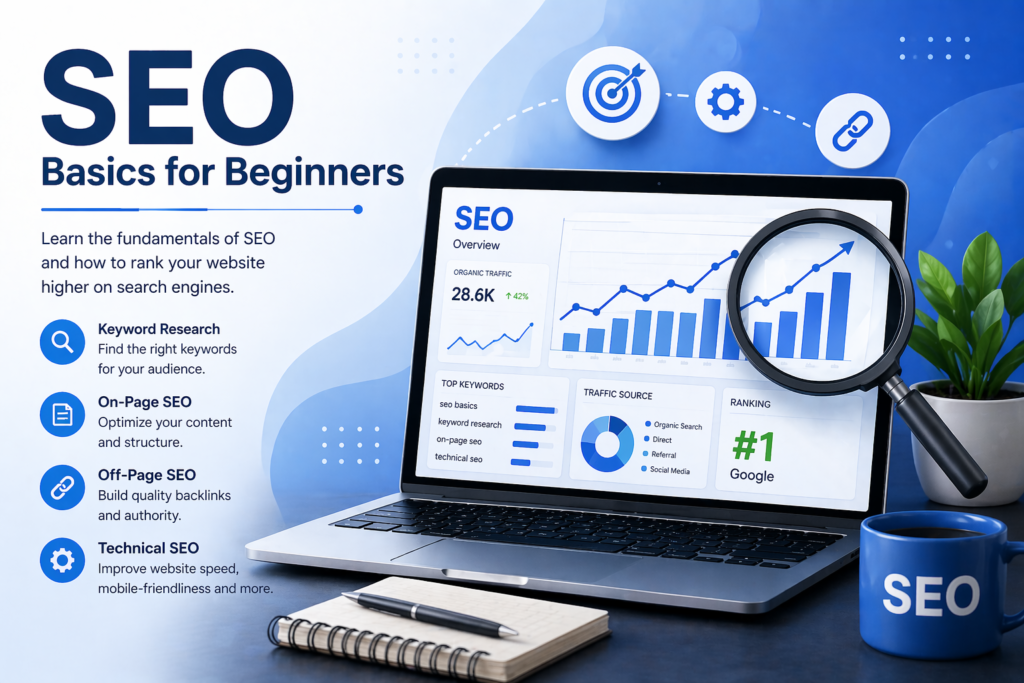
SEO Basics for Beginners

📌 Introduction Search Engine Optimization (SEO) is one of the most important aspects of digital marketing. In today’s online world, having a website is not enough. You need to make sure that your website appears on search engines like Google when people search for relevant keywords. SEO helps your website rank higher in search results, which means more visibility, more traffic, and ultimately more customers. Whether you are a student, a business owner, or a content creator, understanding SEO can help you grow online. 📌 What is SEO? SEO stands for Search Engine Optimization. It is the process of optimizing your website so that it ranks higher on search engines like Google, Bing, and Yahoo. When someone searches for something like “best digital marketing tips,” Google shows a list of websites. SEO helps your website appear in that list. There are three main types of SEO: 📌 How Search Engines Work Search engines like Google use bots (also called crawlers) to scan websites. These bots collect information and store it in an index. When a user searches for something, Google uses algorithms to decide which pages to show and in what order. Important factors include: 📌 Keyword Research Keyword research is the foundation of SEO. It means finding the words and phrases people use to search online. For example: Tools you can use: Tips: 📌 On-Page SEO On-page SEO refers to optimizing the content on your website. Important elements: 1. Title Tag Your title should include your main keyword and be attractive. 2. Meta Description A short description that appears in search results. 3. Headings (H1, H2, H3) Use headings to structure your content. 4. URL Structure Keep URLs short and keyword-rich. Example: /seo-basics-for-beginners 5. Internal Linking Link your pages to each other. 📌 Content is King High-quality content is the most important factor in SEO. Your content should be: Use: Always write for users, not just for search engines. 📌 Off-Page SEO Off-page SEO focuses on building your website’s authority. Backlinks Backlinks are links from other websites to your site. More quality backlinks = higher ranking. Ways to get backlinks: 📌 Technical SEO Technical SEO improves the backend of your website. Important factors: 📌 Local SEO If you have a local business, local SEO is very important. Steps: 📌 Common SEO Mistakes Avoid these mistakes: 📌 SEO Tools Useful tools: 📌 Conclusion SEO is a powerful tool that can help you grow online without spending money on ads. It takes time, but the results are long-lasting. Start with basic steps like keyword research and content creation. Gradually improve your website and build authority. With consistency and effort, you can achieve higher rankings and grow your online presence successfully.

Blog

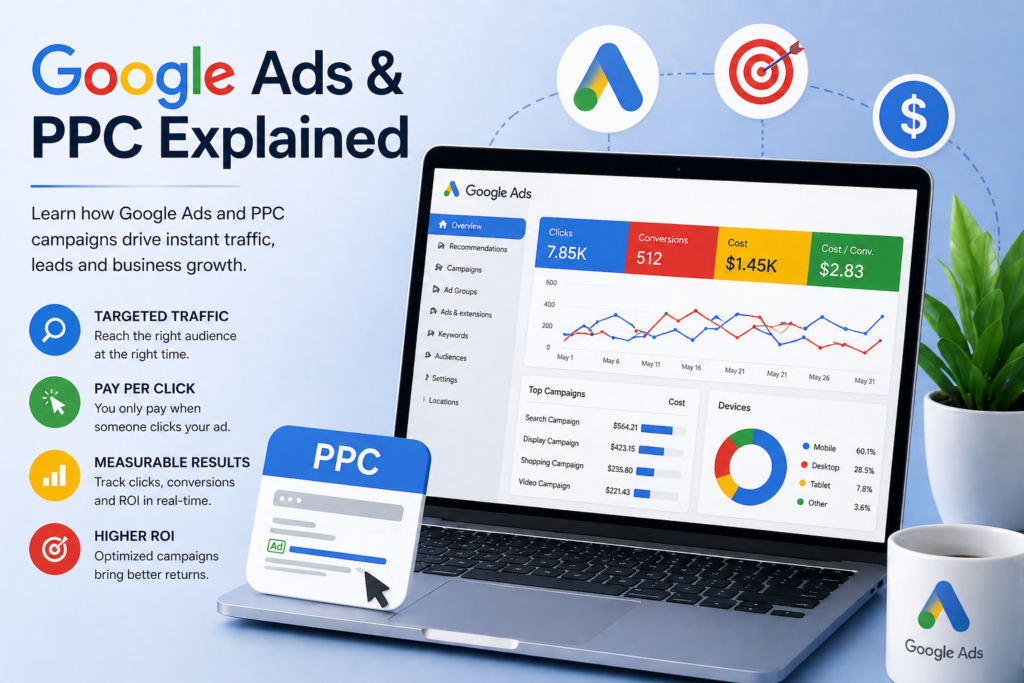
Google Ads & PPC Explained

📌 Introduction In today’s digital world, businesses are constantly looking for faster ways to reach their target audience. One of the most effective methods is Pay-Per-Click (PPC) advertising, especially through Google Ads. Google Ads allows businesses to show their ads on Google search results, YouTube, and other websites. The best part? You only pay when someone clicks on your ad. This blog will help you understand how PPC works, why it is important, and how you can use it to grow your business. 📌 What is PPC? PPC stands for Pay-Per-Click. It is an online advertising model where advertisers pay a fee each time their ad is clicked. Instead of earning traffic organically (like SEO), you buy visits to your website. Example: If you run an ad for “digital marketing services” and someone clicks on it, you pay a small amount for that click. 📌 What is Google Ads? Google Ads is an online advertising platform by Google where businesses can create ads and display them on: It is one of the most powerful tools for driving instant traffic and leads. 📌 How Google Ads Works Google Ads works on an auction system. When someone searches for a keyword, Google runs an auction to decide which ads to show. Key factors: The better your ad quality, the less you may need to pay. 📌 Types of Google Ads Campaigns 1. Search Ads These ads appear on Google search results. Example:Search “best SEO services” → ads appear on top. 2. Display Ads These are image-based ads shown on websites. 3. Video Ads Shown on YouTube. 4. Shopping Ads Used for eCommerce products. 5. App Ads Promotes mobile apps. 📌 Keyword Targeting Keywords are the backbone of PPC. You choose keywords that people search for. Types of keywords: Tips: 📌 Ad Copy (Important Part) Your ad should be: Example: 👉 “Get Best SEO Services – Boost Your Ranking Today!” Use: 📌 Landing Page Optimization After clicking the ad, users land on your website page. Make sure: 📌 Quality Score Google gives a Quality Score based on: Higher Quality Score = Lower cost + Better ranking 📌 Benefits of PPC Advertising 🚀 Instant Results Unlike SEO, PPC gives immediate traffic. 🎯 Targeted Audience You can target: 💰 Budget Control You can set daily budget. 📊 Measurable Results Track clicks, conversions, and ROI. 📌 Common PPC Mistakes Avoid these mistakes: 📌 Best PPC Tools 📌 SEO vs PPC SEO PPC Free traffic Paid traffic Takes time Instant results Long-term growth Short-term boost 👉 Best strategy: Use both together. 📌 Conclusion Google Ads and PPC advertising are powerful tools for growing your business online. They help you reach the right audience at the right time. If used correctly, PPC can generate leads, increase sales, and boost your brand visibility. Start small, test your ads, and keep optimizing for better results.

Blog

The Power of Social Media in Today’s Digital World

Introduction In today’s fast-paced digital era, social media has become more than just a platform for sharing photos and updates—it is now a powerful tool that shapes businesses, influences decisions, and connects people globally. From small startups to large enterprises, everyone is leveraging social media to build their presence and grow their audience. But what makes social media so powerful? Let’s explore. 1. Global Connectivity at Your Fingertips Social media platforms have eliminated geographical barriers. With just a few clicks, individuals and businesses can connect with audiences from different parts of the world. Whether it’s networking on professional platforms or engaging with customers through posts and comments, social media allows real-time interaction, making communication faster and more efficient than ever before. 2. A Powerful Marketing Tool One of the biggest advantages of social media is its impact on digital marketing. Businesses can promote their products and services to a targeted audience without spending huge budgets. Features like: Paid advertisements Influencer collaborations Content marketing help brands reach the right people at the right time. Unlike traditional marketing, social media provides measurable results, allowing businesses to track performance and optimize their strategies. 3. Building Brand Awareness and Trust Consistency on social media helps businesses establish a strong brand identity. By sharing valuable content, responding to customer queries, and maintaining transparency, brands can build trust with their audience. A well-managed social media presence: Enhances credibility Builds long-term relationships Encourages customer loyalty 4. Boosting Engagement and Customer Interaction Social media is not just about posting content—it’s about creating conversations. Features like comments, likes, shares, and direct messages allow businesses to interact with their audience directly. This engagement helps brands understand customer preferences and improve their services. Interactive content such as polls, stories, and live sessions further increases audience involvement. 5. Driving Website Traffic and Sales Social media plays a crucial role in driving traffic to websites. By sharing blogs, offers, and updates, businesses can direct users to their websites and convert them into customers. Strategic use of: Call-to-action (CTA) buttons Engaging captions Attractive visuals can significantly increase conversions and sales. 6. Cost-Effective Growth Strategy Compared to traditional advertising methods, social media marketing is highly cost-effective. Even with a small budget, businesses can reach thousands of potential customers. Organic growth through quality content combined with paid promotions ensures maximum return on investment (ROI). 7. Staying Ahead of Competitors In a competitive digital landscape, having an active social media presence is essential. Businesses that adapt to trends, create engaging content, and interact with their audience regularly stay ahead of their competitors. Monitoring competitors and analyzing trends also helps in improving marketing strategies. Conclusion The power of social media in today’s digital world cannot be ignored. It has transformed the way businesses operate, communicate, and grow. From building brand awareness to driving sales, social media offers endless opportunities for success. However, the key lies in using it strategically—with the right content, consistency, and audience understanding. If used effectively, social media can become one of the most valuable assets for any individual or business in the digital age.

Scroll to Top